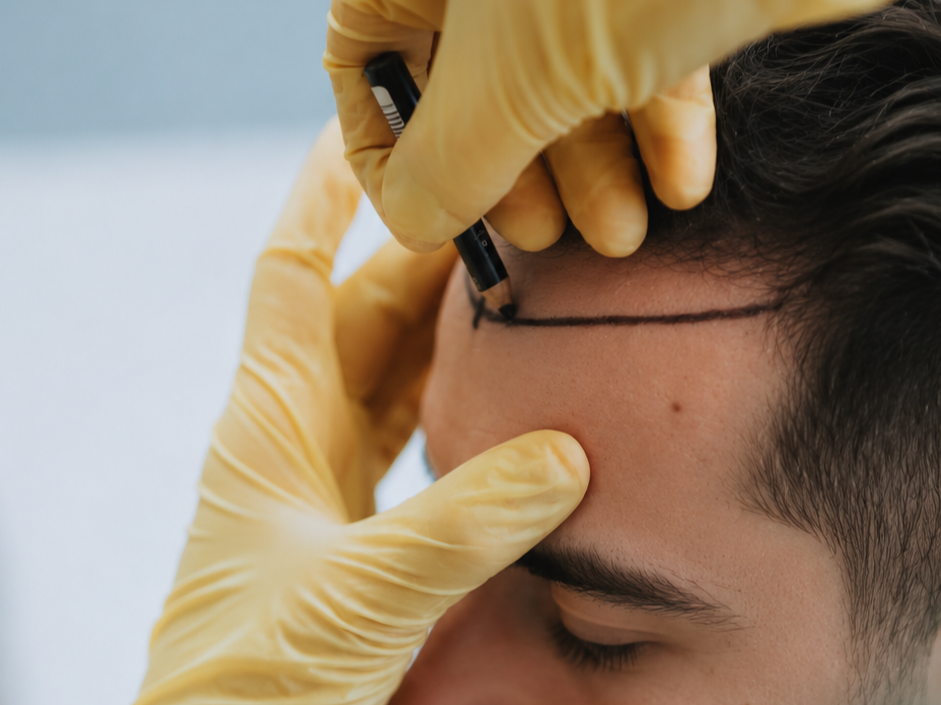
Your Donor Hair Is a Limited Supply
Every graft counts. Here’s how careful planning protects your results today and leaves room for the future.
Most people planning a hair transplant ask how many grafts they need. A better first question is how many grafts your donor area can safely give, now and in the years ahead.
The short answer: it depends on your donor density, your hair characteristics, and how your hair loss may progress. Your donor supply is limited, so a well-planned FUE procedure takes only what can be harvested while keeping the donor area natural-looking and leaving room for future needs.
What Is the Donor Area in an FUE Hair Transplant?
In FUE (Follicular Unit Extraction), individual follicular units are taken from the donor area, usually the back and sides of the scalp, and placed where hair is thinning.
Hair in these regions tends to be more resistant to the hormonal effects behind pattern hair loss (androgenetic alopecia). That resistance is what allows transplanted hair to keep growing in its new location.
Does Donor Hair Grow Back After FUE?
No. Once a follicular unit is extracted, it does not normally regrow in its original site. Every graft taken is one less available for the future.
That is why your donor area is best thought of as a limited supply, and why planning how it is used matters so much.
How Many Grafts Can Be Safely Harvested?
There is no single number for everyone. Two patients with similar density may have very different safe limits. Factors include:
Hair density: the number of follicular units in a given area of scalp
Hair thickness: thicker strands may provide more visual coverage per graft
Curl or wave: curly or wavy hair can appear fuller than straight hair
Hair and skin contrast: lower contrast between hair and skin colour can make thinning less noticeable
Size of the donor zone: the area of stable, resistant hair varies from person to person
Existing thinning in the donor area: some patients show miniaturization there too, which reduces what can be used
A thorough assessment weighs these together rather than working backward from a target graft count. Graft count also influences what a hair transplant costs.
What Happens If the Donor Area Is Overharvested?
Overharvesting means taking more grafts than the donor area can comfortably give. It can leave the back and sides looking patchy or noticeably thin, and because donor hair does not regrow, this may be difficult to correct.
Spreading extractions evenly across the donor zone and staying within a safe limit is designed to help the donor area keep a natural appearance, even with shorter hairstyles.
Why Does Future Hair Loss Matter?
Pattern hair loss can continue after a transplant. Someone who needs a relatively small procedure today may want more coverage years from now.
So the goal is not always to move the maximum number of grafts in the first session. A thoughtful plan balances your current goals with realistic expectations about future loss and remaining donor supply.
Depending on your situation, your specialist may also discuss medical hair loss management or supportive treatments such as PRP (platelet-rich plasma). PRP may help some patients with pattern hair loss, but results vary and it does not replace careful surgical planning.
How Is the Donor Area Evaluated?
At Apex Hair Restoration & Aesthetics in downtown Ottawa, a donor assessment may include a close look at scalp density, hair characteristics, signs of miniaturization, and the pattern of your existing hair loss. Your medical history, age, and goals are considered as well.
These findings help determine whether FUE is a good fit, what may be realistic, and how to preserve your donor supply. Not everyone is a good candidate for a hair transplant, and some patients may benefit from medical treatment or monitoring before considering surgery.
What Should You Ask Before Your FUE Procedure?
Whichever clinic you choose, these questions can help you make an informed decision:
How will my donor area be assessed before surgery?
How many grafts can be harvested while keeping my donor area natural-looking?
What options will I have if I want more restoration later?
Who will I see for follow-up care after my procedure?
That last question often matters more than people expect. Choosing a clinic close to home in Ottawa means follow-up visits are easy to attend as your results develop.
Frequently Asked Questions
Can I have a second hair transplant?
Often, yes, depending on how much donor hair remains after the first procedure. This is one reason conservative planning from the start can be valuable. If a future procedure is part of your plan, Medicard financing is available for FUE procedures at Apex.
Will my donor area look thin after FUE?
When extraction stays within a safe limit and is spread evenly, the donor area is designed to keep a natural appearance. FUE leaves tiny dot-like marks that are usually hidden by surrounding hair, though very short buzz cuts may reveal them in some cases.
Plan for Natural-Looking Results, Today and Tomorrow
A hair transplant is not about moving as many grafts as possible. It is about using a limited supply thoughtfully, for a result that suits you now and leaves room for the future.
At Apex Hair Restoration & Aesthetics, we welcome patients from across Ottawa and Ontario for individualized consultations. During your visit to our downtown Ottawa clinic, our team can assess your donor area, talk through your goals, and help you understand what may be realistic for your hair, today and in the years ahead.
Curious how much your donor area can safely give? Start with a free, no-obligation consultation below.